Log H
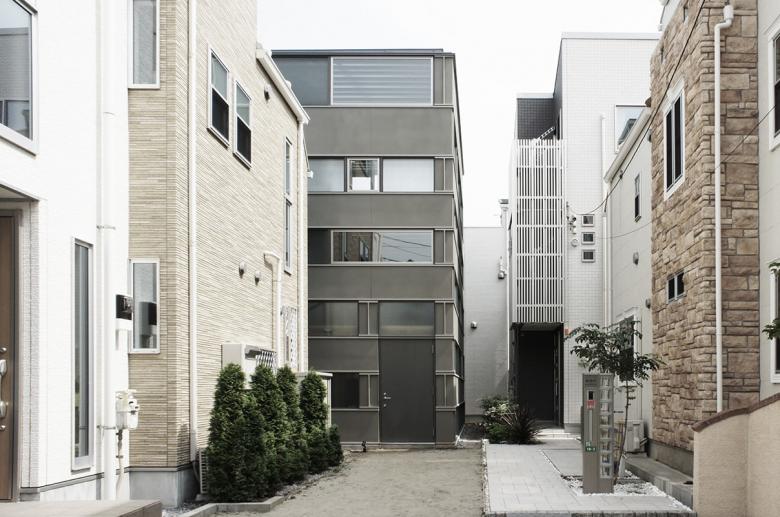
Nerima-ku, Tokyo, Japan
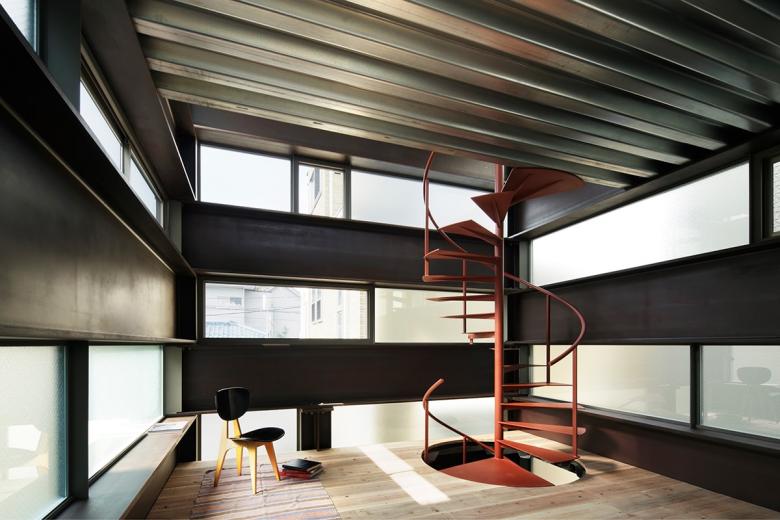
A log house of steel
My interest lies in the 'shinkabe' (plastered wall with exposed timber pillars) rather than the 'ookabe' (wall where pillars are plastered over), and in what follows beyond.
Whereas 'ookabe', a plain surface that hides its framework inside, accentuates 'spatiality' by reducing itself as a presence that only shows the 'side' of a space, 'shinkabe' not only points to the space as a 'side' but also adds to the living environment the 'locality' that well-constructed material things radiate around by exposing architectural framework on its surface.
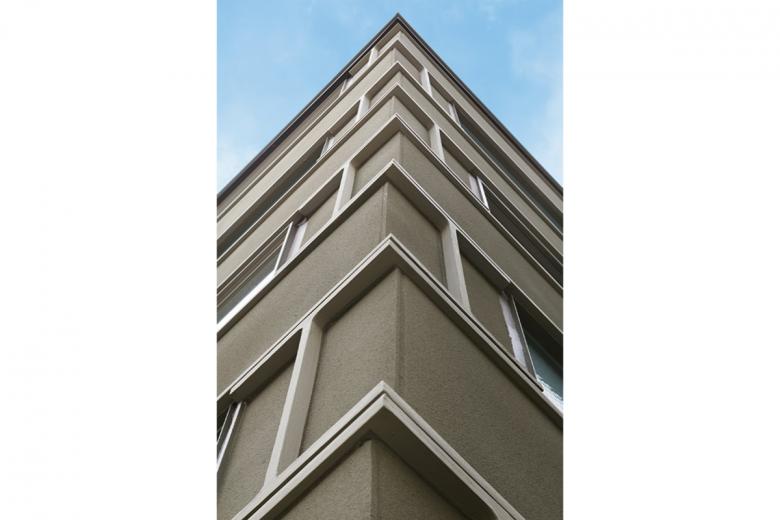
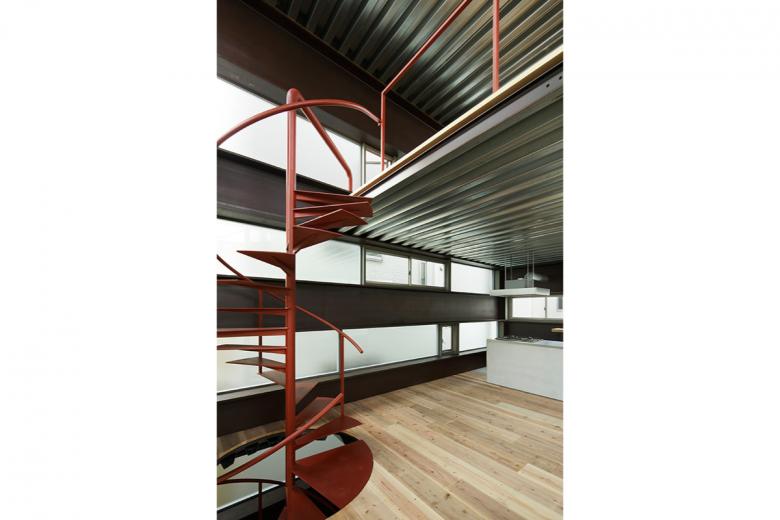
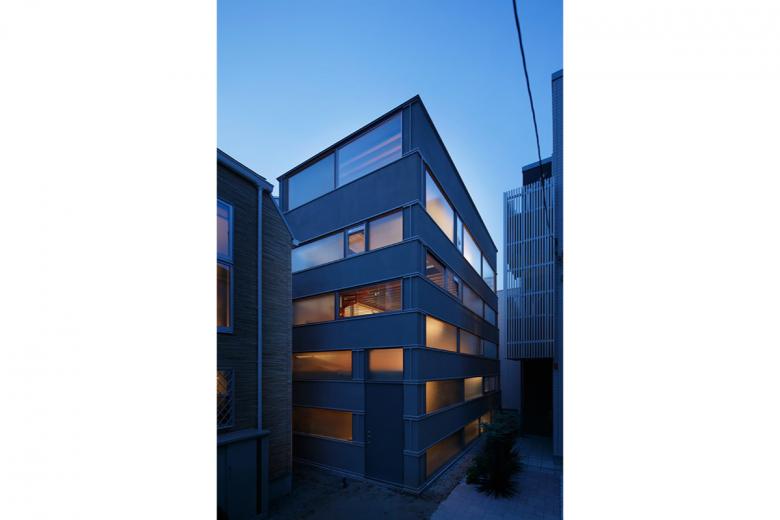
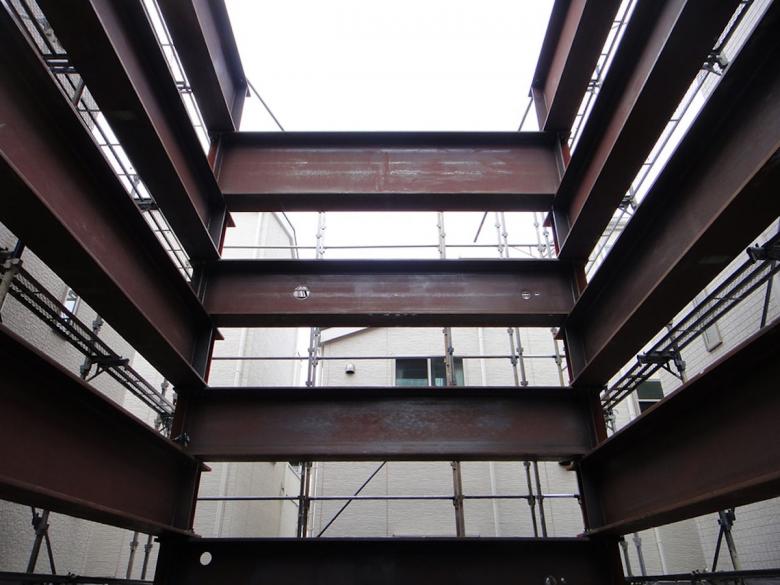
Another type of wall that goes beyond 'shinkabe' is the 'log house/azekura',generating an even stronger locality. As the name suggests, the log house's wall surface is made up exclusively of 'round timber (=Log)', the structure material, whose strong physicality generates an intense locality. The log wall, devoid of plain surface as a 'side', places it self at the exact opposite of 'ookabe' which expresses nothing but a pure 'space', and maybe is a presence expressing a pure 'location' - with 'shinkabe' placed somewhere in between.
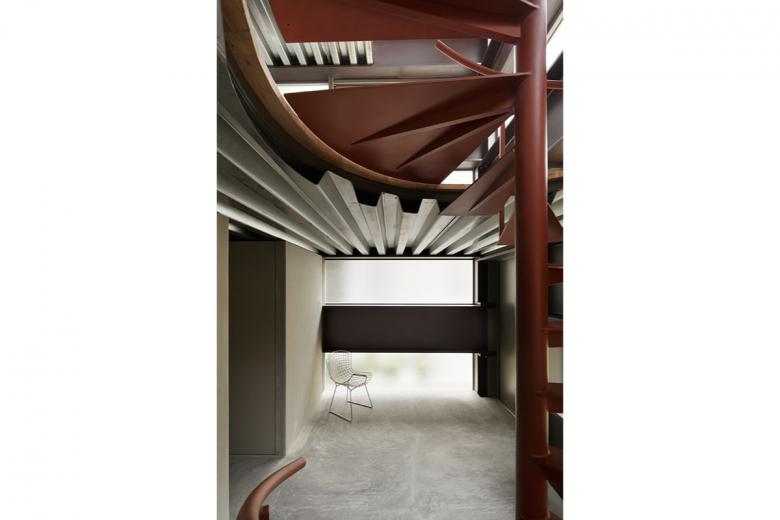
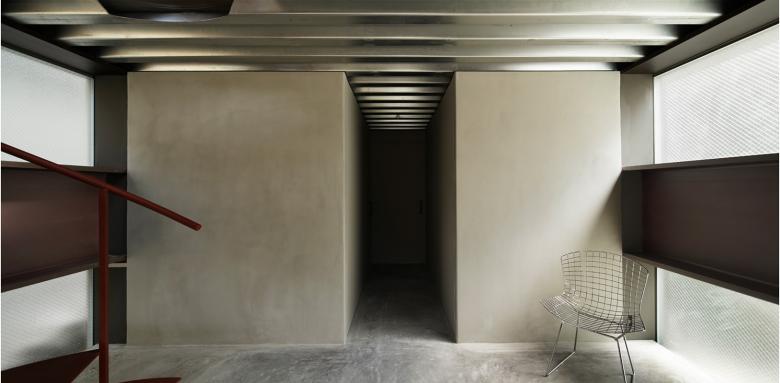
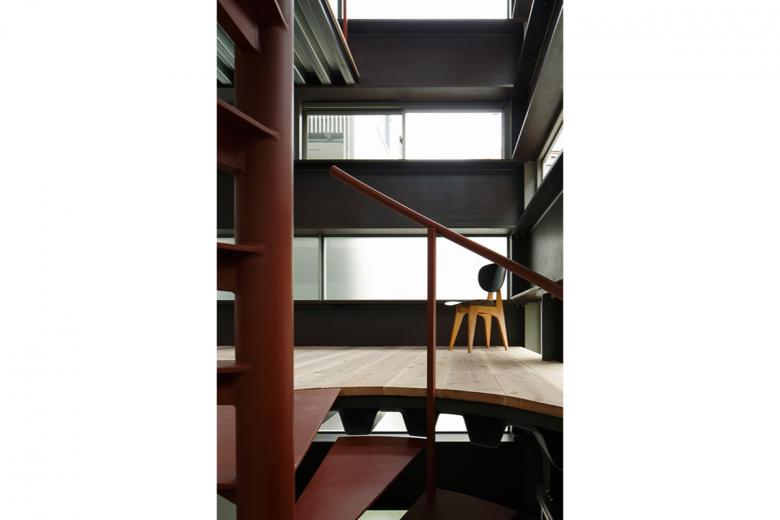
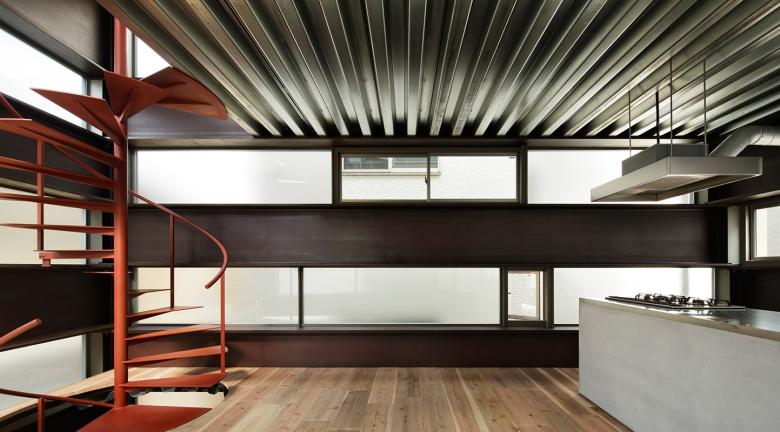
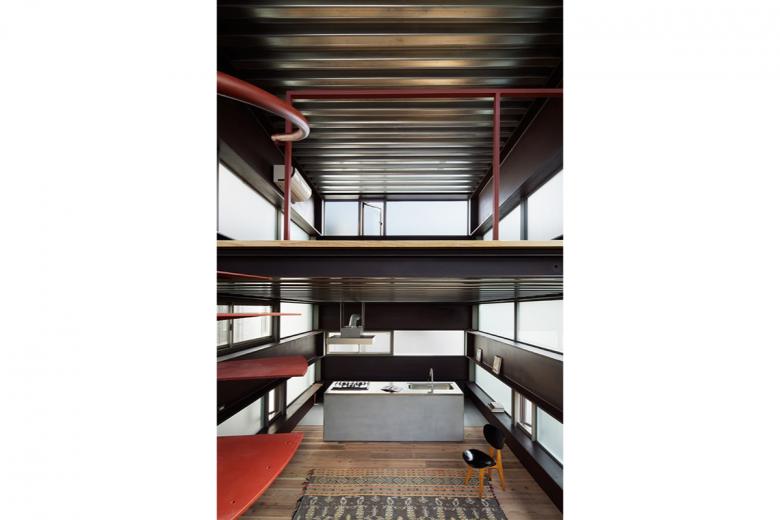
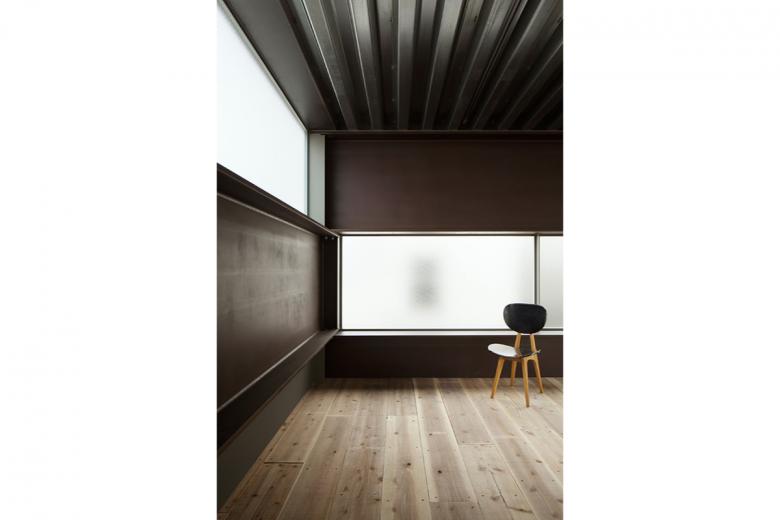
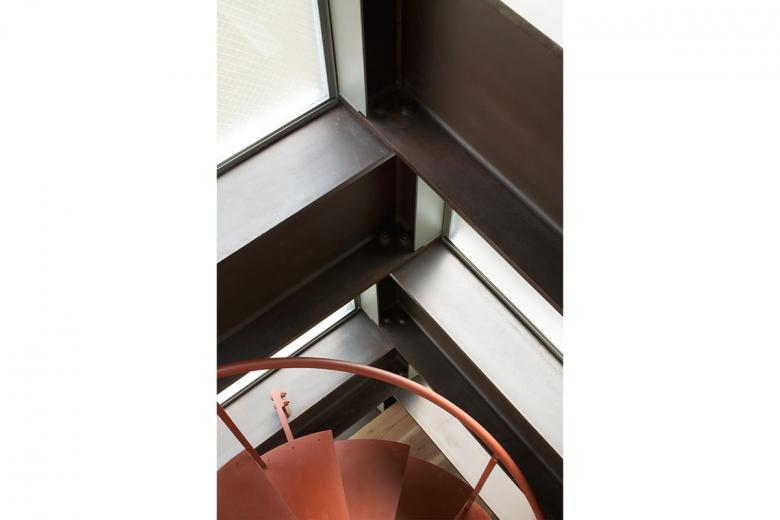
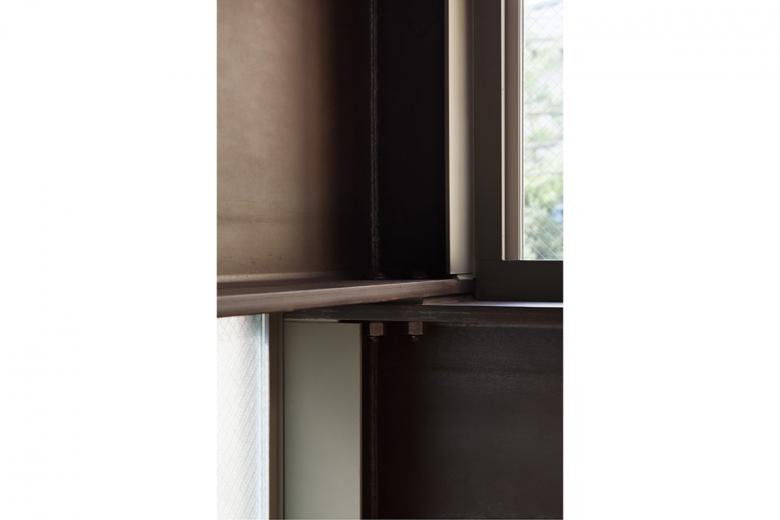
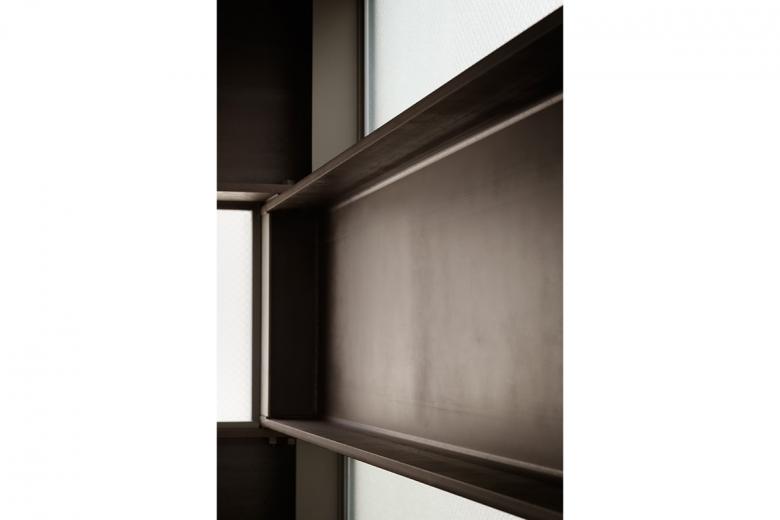
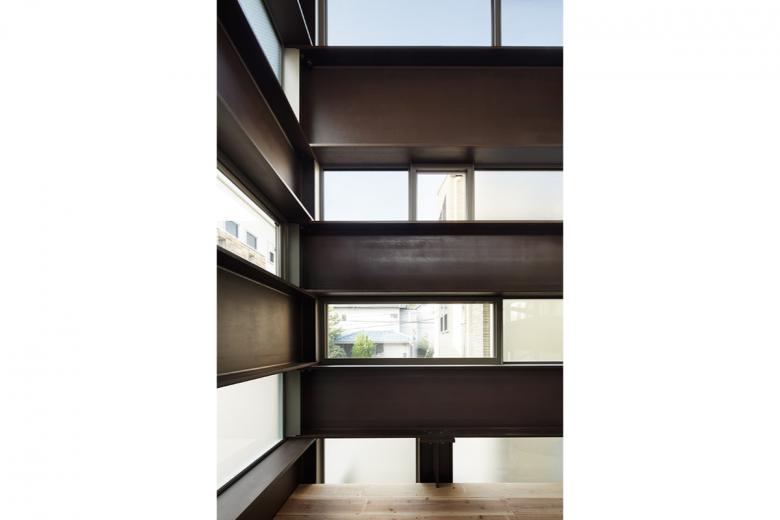
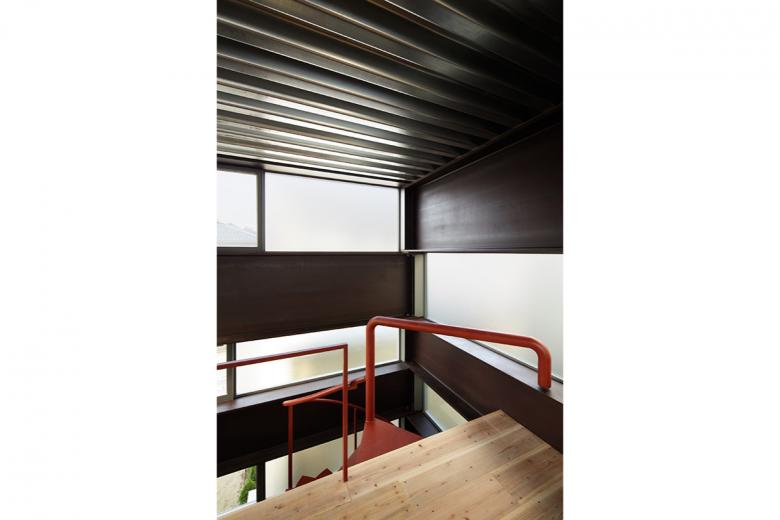
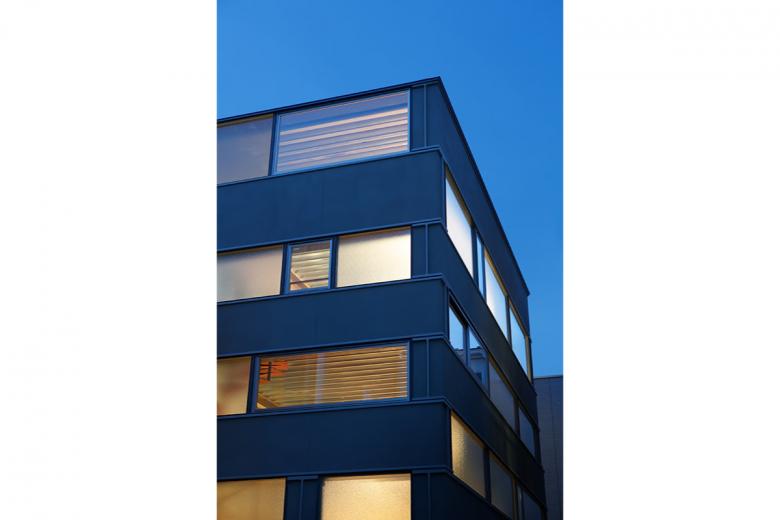
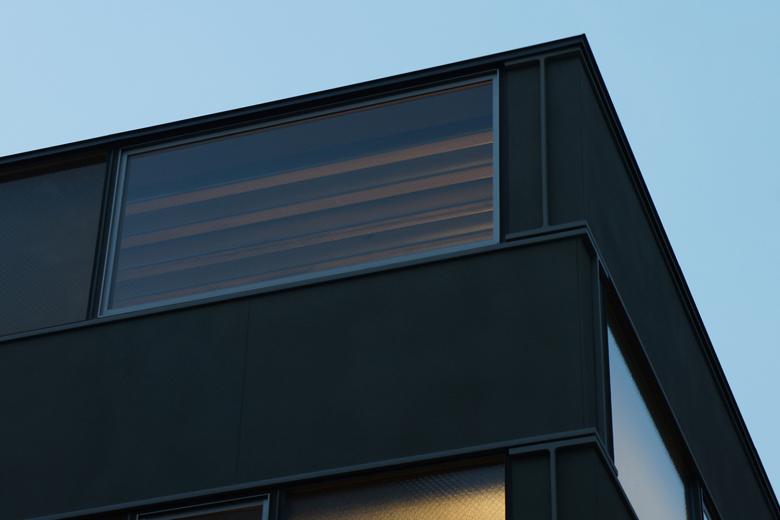
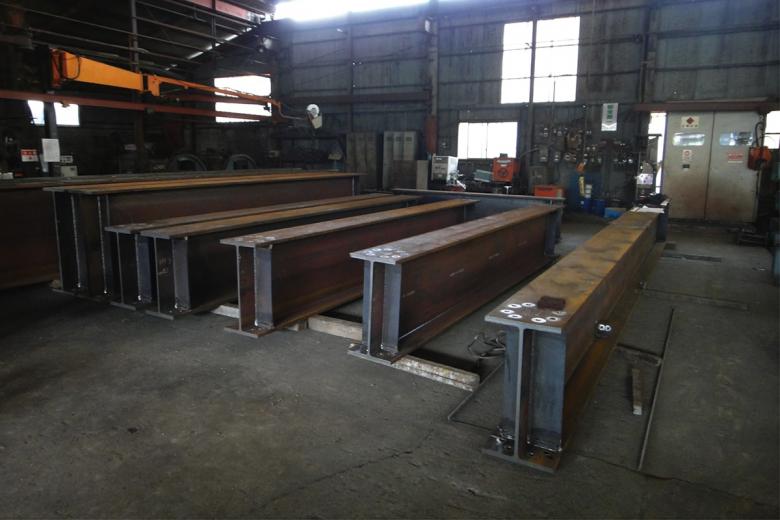
We chose this 'log house' style when it came for us to design a house for a couple on a site in a corner of very commonplace newly-developed housing lots in Metropolitan Tokyo. But here the log house is made of H-steel with a large section 700 x 350 x 16 x 25(mm) mostly used in construction of large scale buildings, in stead of round timber. H-steel's 'material properties' such as enormous weight and strength, mathematical regularity distinctive of roll-milled H-steel, and gentleness expressed in rounded corners, were assembled into a log house shape and intensified/amplified in an attempt to furnish a desirable 'locality' to a featureless,newly-developed residential area.
We expect that this intellectual yet gentle and strong locality will be one (or a 'seed' of locality) worthy of the new urban area that is different from the rugged, rustic locality of a regular log house that is an accumulation of round timbers.